Series Intro

Rome, Open City
Filmed immediately after the end of the Second World War, on location in Rome, with a mix of professional and amateur actors, it tells a story of resistance to the Nazi occupation of Rome in the closing days of the war.

Born in Flames
Set ten years after a socialist-democratic revolution in the United States, the film explores the ways that marginalized groups such as women, people of colour, and queer people continued to be targeted and suppressed.

The Battle of Algiers
A groundbreaking neorealist film, this acclaimed classic depicts the organization and activities of the guerilla revolutionaries of the National Liberation Front in Algeria in their battle for freedom against the French colonialist armies.

I am Cuba
Consisting of four short stories from different points of view linked by a single narrator, I Am Cuba shows the way that the country was exploited by tourists and foreign capitalists.
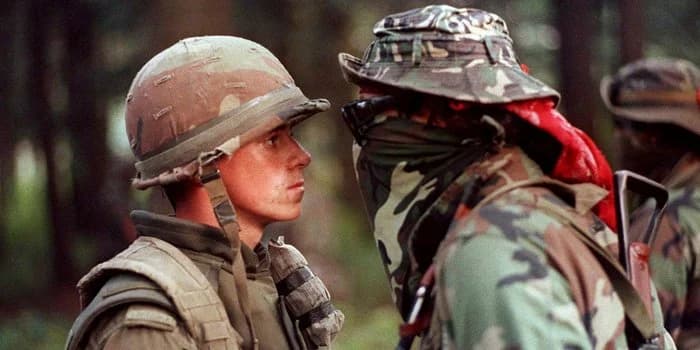
Kanehsatake, 270 Years of Resistance
In July 1990, a dispute over a proposed golf course to be built on Kanien’kéhaka (Mohawk) lands in Oka, Quebec, sets the stage for a historic confrontation that would grab international headlines and sear itself into the Canadian consciousness.
Curation Notes
This documentary by Abenaki activist Alanis Obomsawin emerged as a real time response to the 1990 Oka Crisis in which a Mohawk protest of the expansion of a golf course onto their land was met with a police barricade and later military siege of the Mohawk reserves which lasted 78 and led to two fatalities - one on each side. Obomsawin inserted herself and her shifting crew into the crisis as it occurred, documenting events from the Mohawk side. The film served as a key counter to the portrayal of the conflict in Canadian mass media, and the crew’s presence is thought to have partially de-escalated matters. A landmark in Indigenous filmmaking, we include Kanehsatake to remind our audience that Canada is not innocent of colonialism or oppression. We dedicate this film to the Indigenous leaders and activists of Canada who find themselves continually forced to fight for recognition of their legal rights.
Written by Ben Rowe.